
2026!
A year of mixed feelings?

As we mentioned at the end of last year, we’ve been reaching out to some of our ongoing always-on panels and asking them their opinions on various subjects.
We have our Behind the Flag panel (made up of those who support flag waving in the UK and/or attended the Unite the Kingdom marches), our Heartland panel (made up of a range of middle class homes across the UK) and our Youth panel (made up for 13 year-olds to those in their early 20s). They’re only handfuls of people, but they’re rich in texture and depth, they live the length and breadth of the UK, and deliver powerful truths from the realities of real people’s lives.
We’ve been working with them for our clients (to offer quick, cost-effective turnarounds and quick dips of reality into specific subjects). But we also work with them on things we find interesting ourselves - areas we self-fund for our own interest.
2026
For the final newsletter post of last year, we asked a range of people from our panels about Christmas.
Well, we also asked them some questions about 2026 too.
We asked them simply: “How does next year feel to you?”
A simple question, to a handful of ‘normal people’ around the UK. This post isn’t some super-collated ‘trends’ report, put together by out-of-touch brands, analysts with skin in the game, or AI-obsessed investors. It’s how real real people around the UK are feeling about 2026.
And given how 2025 was for lots of people, and what the news cycle and their social feeds focused on, we expected a bit of fear and doom and gloom. And we found it.
But, it’s not all negative.
Because while the first few paragraphs of this email might feel like you’re reading a doom scroll, if you keep reading you’ll find that once our participants stopped looking at the news and stuff around them, and started looking at their own lives and home, the mood changed.
It transformed from pessimism to optimism.
Yes, guarded optimism for some, but optimism nonetheless.
Part 1: The worries of 2026
When you ask real, everyday people to look at the macro picture of 2026, the mood for many around the country is dark. Sorry if you don’t want to read that. Sorry if it takes you out of your comfort bubble a little.
But it’s the truth. And that’s what we exist to deliver.
For some people - like our Behind the Flag participants, the frustration has hardened beyond negativity into something more volatile. Time is passing and their feelings and beliefs aren’t dissipating, they’re hardening. They don’t just feel ignored - they feel like the social contract has snapped, and something needs to happen in response to change the status quo.
One participant didn’t hold back on his dread for the year ahead. You can hear it in his voice. The exhaustion, the trepidation, the frustration:
“2026 is just fear. Fear. Absolute fear. I’m 50 years old… seen it all… lived through the Thatcher years… lived through lunatic Blair coming in. Blair was the start of this fucking evil, EU driven, absolute quagmire of life. I think about our forefathers and the respect they had, and I used to think that they was hardworking. Well, they were, but I think if I brought my grandparents back here, they wouldn’t stand for it. And I think that’s why me as a white man, middle aged is being targeted because they know that’s the last bit of resistance.”
Another Behind the Flag participant went even further. For her, the tension in the country has reached a boiling point, and she feels something needs to change in 2026 for the pressure cooker valve to be released:
“I know it sounds awful, but I’d like to see Civil War on the streets. I think people [like me] - we’re all at boiling point. We’re all teetering on the edge of something big, and it’s either gonna be doom, doom, doom, or something big and positive is gonna happen to make people like me feel happy again because right now… I don’t feel that at all.”
Both of those participants are in their 50s, and probably a little more discontented than a bunch of you reading this… so you may be inclined to think they are ‘extreme’ or ‘far right’ but as we’ve said, we try not to label people. However, we do feel it’s important to hear their voices.
But it’s not just the older generation - maybe slightly further ‘right’ than some - feeling the weight of the world on their shoulders in 2026.
Our Youth panel, usually the source of energy, is feeling the pressure too, but for very different reasons. For them, 2026 isn’t about politics; it’s about living with the pressure of a system they can’t control, and the creeping anxiety of technology. Whether it’s the scrutiny of social media or the threat of AI changing the careers they’re yet to build. One 14-year-old told us:
“ I’m always in school and I’m always working hard so that I can be my very best. And… I need to start thinking about what I want to do with the future and what I want to be doing years from now. Not just what’s happening right now in this year.
I also think everyday life for everybody’s gonna change because, I don’t know, I just feel like social media… every year social media gets more advanced and things with such as AI and… everything just gets harder as everybody, everything advances.
So I feel like for everybody it’s gonna be… it’s harder just to get going with your daily life because like everything’s becoming more expensive. And then you’ve gotta worry about AI… because now at school you’ve gotta write everything out to make sure that it’s not AI.
… it’s just not gonna be like good for society.”
She carries on, talking about the impact of exams and the preparation needed for them.

Over the next two years, there’ll be about 1.5 million teenagers sitting their GCSEs across the UK. That’s a lot of teenagers studying, worrying, feeling anxious. This is how it manifests for a typical teenager:
“My life is gonna be completely controlled by exams and revising. So it’s just gonna be scary. It’s scary knowing now that this is gonna be the last bits of like actual freedom that I’m gonna have for a while. Because then after my GCSEs, you’ve gotta go into A levels. So I just feel like… I’ll enjoy the first part of the year when I’m still in year 10 more than I will the second half of the year.”
And if we stopped the email there, this would be a very depressing email to open on your first week back…
BUT!
Part 2: The hopes and optimism around 2026
A strange thing happened when started chatting about different parts of their lives. Once they got the fears off their chests and started talking about their their hopes for 2026, the tone shifted completely. You could feel the energy shift.
We found optimism!
The Youth: Less cynical, more hopeful!
Whilst the news and the feeds of a lot of us scream about a broken Britain, our Youth panel sees something else entirely. They see the country from a more optimistic point of view - a country that is improving, healing, connecting.
Listen to our 14-year-old again. Moments after talking about the fear of exams, she switched to a genuine belief in human kindness - one that she feels is growing and getting better in the UK:
“I feel like we’ve gotten a a lot better as a country at helping other people. I went into the Trafford Centre yesterday and - I know they do it in America - they have these angel trees and just thought it was really nice to see other people being generous and helping other people. And I just feel like it’s something that we do, we’re getting better at as a society and I feel like it’ll just keep getting better as we go into 2026. And the same with stuff like in our local community. Like we’ve done loads of work for food banks near us and it just feels like we’re getting a lot closer as a community, as Britain as like a country.”
This echoes what we hear from this cohort often: a hope, a belief, a feeling that the UK is a tolerant, caring and optimistic nation. We tend to see those feelings even out a little as our teenagers enter adulthood - as more adult reality enters their lives.
And of course we’re dealing with people’s beliefs here - not scientifically robust, nationally representative ‘truths’ - so who knows which side of the fence is ‘right’ or not? Does it matter? Is it a matter of opinion, or a matter of perception?
Whatever it is, this optimism around the UK becoming a more caring society is a stark, hopeful, optimistic contrast to the pessimistic rhetoric from some of the older generations we work with.
The Heartland: Fortress Optimism
For our Heartland panel - made up of different aged middle class participants from across the UK - optimism comes a bit closer to home, it’s about the home and the sanctuary it brings.
Our students look forward to the sanctuary of the family home over Christmas, our parents look forward to quality time with their children and their parents as multi-generational family time takes centre stage. And we see from some that this sense of sanctuary is set to grow in 2026.
We spoke to one of our participants - a SENCO teacher and mother. Her 2026 looks bright not because of government policy, it’s despite government policy which will squeeze her middle class finances even more.
This means her and her partner are working harder than ever in their home which is undergoing significant renovation, renovations they had to pause during the summer due to the financial squeeze.
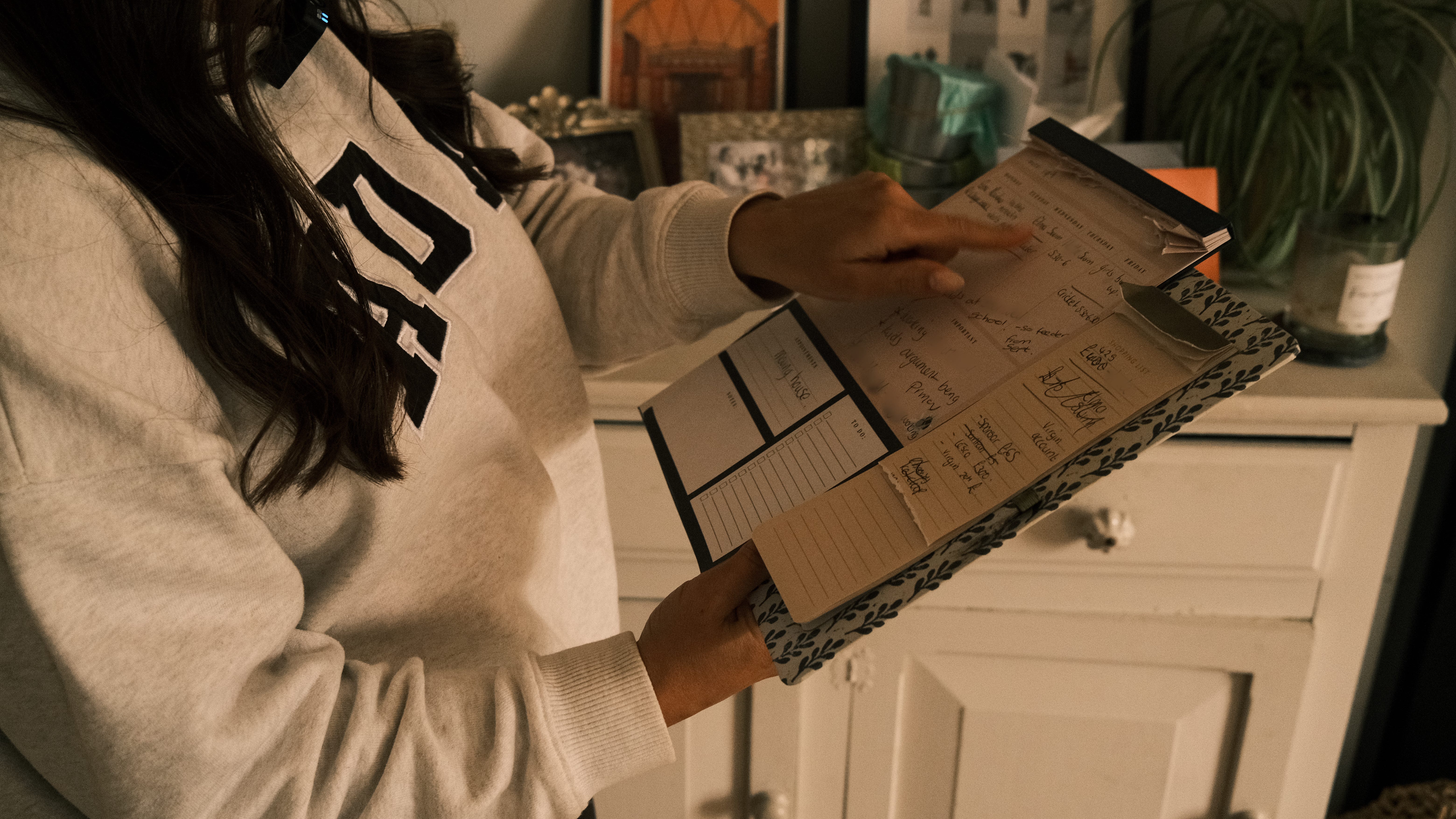
Her optimism is built from the luck - sheer luck - that her mortgage is up for renewal and it’s looking likely that her and her partner will get a better deal than when they remortgaged during the Truss era. But this optimism is prefaced with the hope that how hard they are working will recede:
“ I would like [my partner] to slightly work a little bit less and enjoy some… I think he’s done nine days in a row, currently without a day off… but after taking the hit with the extension, our mortgage goes down next year. So that is a great thing to look forward to… so that’s going to make a significant impact for us… even if it’s just £300 a month. That’s brilliant, so I am really looking forward to [2026].”
A little bit of digging on ChatGPT tells us that about 1.8m fixed rate mortgages end in 2026 in the UK. So lots of people’s finances will change. Because remember that 1.8m mortgages doesn’t mean 1.8m people.
Those 1.8m mortgages mean - approximately - about 4.9m people. That’s about 3.6m adults and 1.3m children whose lives will be impacted by mortgage renewals in 2026.
And whilst it’s hard to predict whether those people are on 5-year fixes (which means they’ll likely be paying more when they remortgage) or on 2-year fixes (which likely means they’ll be paying less when they remortgage) - either way it means probably the biggest impact to their finances over the next year - positively or negatively - is down to their mortgage.
What impact will that have on your brand?
Will some of your buyers be trading down more?
Will some be splashing out more?
And how do you track the reality of that beyond your brand and category?
As we told a client recently: “Your biggest competitor isn’t your enemy in the category, it’s mortgage rates and inflation.”
This was because one of our participants had opted to buy a competitor instead of their brand, and we found out it was nothing to do with brand perception or the new campaign they’d just launched. It was because their mortgage rate had changed. And of course the brand had no way of knowing that other than to go and physically speak to people.
That’s because brands love to track the category and competitors, and compare to the Nth degree things like ‘brand love’ or ‘worth paying more for’ or media spend data.
But that myopic category-led research misses the reality of the above - the reality that someone might stop buying you because their mortgage has gone up.
Reality First, Brand Second
As we head into 2026, it’s easy to get swept up in the trends around you: the AI, the cool campaigns, the industry patting itself on the back, or indeed looking over its shoulder worryingly - all packaged up in beautifully designed PDFs.
But it’s imperative we still listen to people. Real people. Your customers and your prospects.
We often see businesses relying heavily on big data and macro trends to plan their year. But data often misses the nuances of people’s real lives. It captures the what, but it misses the human messiness of the why.
If you really want to understand the realities of people’s lives in 2026, you can’t just track them; you need to engage with them.
That’s what we do. We inject reality into your strategy by talking to the people behind the stats. We’re here to help you make sure your 2026 strategy is built on real lives, not just spreadsheets.
Happy New Year!